How to Relieve Your Sciatica Pain with Physical Therapy
Are you experiencing the following symptoms?
- Burning or “electric” pain that radiates from your lower back down through your leg
- Numbness, tingling, or a pins and needles sensation in your back or leg
- A sense of weakness or heaviness in your leg
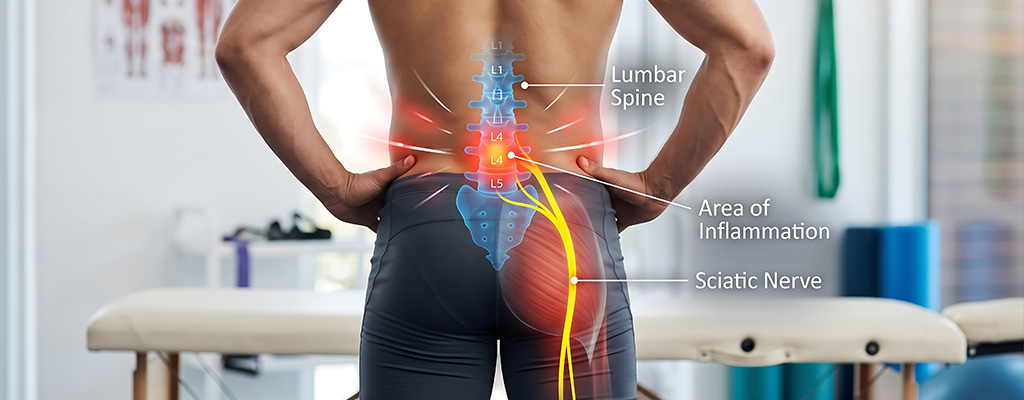
If so, you may have developed sciatica, which isn’t so much a condition in and of itself as it is a sign of something else, such as a herniated disc or issues with your spine. It develops when the sciatic nerve — a major nerve that runs from your lower back all the way down to your feet — becomes pinched or irritated in some way.
Sciatica is a somewhat misunderstood term. Some people use it to describe any pain or discomfort in the lower half of your body. But true sciatica is a neuropathy that affects the sciatic nerve, and to address it, you need to resolve the underlying source of irritation to the sciatic nerve.
Fortunately, the physical therapists at Kintsugi Physical Therapy and Wellness can help you do exactly that! Today, we want to give you a glimpse of the process we use when addressing sciatica and sciatic pain.

Our 3-Step Approach to Treating Sciatica
Step 1: Confirm Sciatica and Uncover the Cause
When you visit us for your first appointment, we’ll begin by confirming that the discomfort in your lower extremity actually involves the sciatic nerve at all. Other conditions can cause sciatica-like symptoms, such as spinal osteoarthritis or piriformis syndrome.
If we confirm that your sciatic nerve is impaired, our next step is figuring out why. By far, the most common cause of sciatica is a herniated disc, which occurs when an intervertebral disc bulges and presses against the sciatic nerve. Less commonly, spinal stenosis (a narrowing of the spinal canal) can irritate the sciatic nerve, as can damage from osteoarthritis.
Step 2: Develop a Treatment Plan
Once we know why you’ve developed sciatica, we’ll work to develop a treatment plan to address that underlying cause. Fortunately, physical therapy is the preferred method for treating most of the common causes of sciatic pain.
If your sciatica results from a herniated disc, we’ll help you reduce your pain and facilitate your recovery. Herniated discs will generally resolve within 2–8 weeks, and regular physical therapy can help speed up that process. You can expect the following:
- A drug-free pain management plan utilizing manual therapy, movement modifications, and pain-relieving modalities
- Targeted mobility exercises to free up restrictions in your spine
- Postural corrections to remove pressure from the herniated disc
- Strengthening exercises, particularly in your core, to help stabilize and support the spine
- A return-to-activity schedule to ensure you don’t reinjure yourself
If your sciatica results from spinal stenosis or arthritis, we’ll focus on helping to relieve the pressure from your sciatic nerve. Treatment will generally resemble what we do for herniated discs, including pain management, mobility work, and strengthening exercises, adapting them as needed.
Step 3: Prevent Future Bouts of Sciatica
Once we’ve helped resolve your sciatica, we also want to help prevent it from occurring again. We’ll provide you with the guidance you need to stay pain-free. Here are a few sciatica prevention tips to get you started:
- Improve your posture, which means keeping your spine in alignment. Our PTs can show you how!
- Avoid prolonged postures, especially prolonged sitting. If you have a desk job, get up and move around every 30 minutes or so. If you have a job that requires you to stand in one position for an extended period, take breaks and switch up how you’re standing (such as shifting your weight back and forth).
- Get moving! A regular exercise routine will help keep your back and core muscles strong. Our physical therapists can suggest specific exercises and workout options to ensure you stay active even after finishing physical therapy.
- Use proper lifting techniques. We’ll show you what you need to know.

Say Goodbye to Sciatica Pain
If you suspect you’re dealing with sciatica, call the team at Kintsugi Physical Therapy and Wellness to make an appointment. We can let you know for certain and guide you to lasting pain relief — whether or not your sciatic nerve is to blame.
Sources: ChoosePT, Physiopedia
Hitting the Slopes? Tips for an Injury-Free Ski Vacation
As ski resorts start to open up for the season, now’s the time to start preparing your body to avoid an injury this winter. The Kintsugi Physical Therapy and Wellness physical therapists can help you every step of the way.
First, we’ll perform a detailed assessment to look for any muscle imbalances, weak areas, and other impairments that could impact your performance on the slopes.
Next, we’ll develop a customized strength and conditioning program that addresses your unique needs. Areas we’ll target might include:
- Core strengthening to help you stay stable (and upright)
- Strengthening of the leg muscles, especially our quads, hamstrings, and glutes, to ensure good balance and control
- Mobility and flexibility training in your hips, knees, and ankles so you can stay agile
Start your training early so you’re ready when you hit the slopes. Call us to schedule your appointment today!

Source: NCBI / PMC
Pilates: A Great Way to Strengthen Your Core
At Kintsugi Physical Therapy and Wellness, we frequently include “core strengthening” as part of our therapeutic exercise plans, and for good reason: a strong core can help reduce back pain, improve your balance and posture, and ensure your entire body moves effectively.
While there are multiple ways to improve core strength, one that we want to highlight today is Pilates. This unique approach to exercise was first developed during World War II and then rose to prominence among New York City dancers in the 1950s. It’s now a staple in fitness centers throughout the world.
Five Reasons Why We Love Pilates So Much
- It’s a “mind-body” exercise that incorporates stretching and breathing exercises alongside strengthening exercises, adding a stress-relieving quality to your workout.
- It targets your deep core muscles — the muscles most responsible for stabilizing your spine, reducing back pain, and improving your posture.
- It helps improve your body awareness (proprioception), a key factor in preventing falls and injuries (alongside core strength).
- With a little instruction and the occasional modification, Pilates is appropriate for almost everyone, including pregnant women, people working through rehab, and those just starting to get active.
- It’s low-impact yet challenging. Most exercises work by asking you to move your limbs as you hold your body in a specific shape, helping all the parts of your body work together.
Want to get started with Pilates? Schedule an appointment with the team at Kintsugi Physical Therapy and Wellness. We can let you know if Pilates is the right fit for you, offer modification suggestions as needed, and guide you through some of the most common exercises.

Sources: Musculoskeletal Care, PubMed
Patient Success
Staff Spotlight

Sara Nichols
Sara graduated from Sonoma State University with a degree in Kinesiology in 2012 and then continued on to earn her Doctorate of Physical Therapy from University of New England in 2016. Since she graduated, she has worked with a very diverse patient population due to working as a travel physical therapist. However, her specialty and passion lies with working with those who have any pelvic health concerns. This includes pelvic pain, sexual dysfunction, urinary/bowel concerns, gender-affirming care and peri- and postpartum. She works with all genders and has a trauma-informed approach.
Sara believes in being compassion forward and she will happily provide as much education as she can so you can better understand your unique body and how to care for it. She integrates various forms of manual therapy, performs dry needling and creates practical home programs to suit anybody from new parents to athletes.
Outside of work, Sara enjoys working in the garden (slowly earning that green thumb!), hiking and camping, snowboarding and spending time with her husband, stepson and rescue dog. She also tries to get a couple of international trips during the year, so she is also open to hearing your recommendations!
Exercise of the Month
Figure 4 Bridge
Glutes • Hips
Begin on your back. Bend your knees and keep your back flat on the ground. Cross one leg over the other so that your legs make a “4”.
Gently, contract your abdominals and hold to keep your back flat as you move up into the bridge position. Remember to breathe.
Gently, squeeze your butt muscles and lift your hips off the ground. The goal is to have your hips aligned with your knees and shoulders.
3 Sets • 10 Reps
Product Spotlight

Osteoben®
A comprehensive vitamin and mineral blend formulated to support bone strength and structural integrity, ideal for individuals looking to maintain healthy bone density.*
Benefits
A synergistic blend of vitamin D, vitamin K1, vitamin K2, calcium, magnesium, zinc, and soy-free genistein (from Japanese Sophora extract).
- Supports bone mineral absorption and strength*
- Supports bone maintenance, density, and protein activation*
- Provides structural bone-building minerals, including calcium, magnesium, and zinc*
- Delivers plant-based phytoestrogen support*
Recommended Use: Take 4 capsules daily or as directed by your health-care practitioner.
Maple-Roasted Butternut Squash & Kale Salad
Looking for a nutritious dish to bring to your table this Thanksgiving? This Maple-Roasted Butternut Squash & Kale Salad combines warm roasted squash, hearty greens, and a touch of maple for a seasonal side that’s as nourishing as it is delicious.

Ingredients
- 3 cups butternut squash, peeled and cubed
- 2 tbsp olive oil, divided
- 1 tbsp maple syrup
- 4 cups chopped kale, stems removed
- ¼ cup dried cranberries
- ¼ cup chopped pecans
- 2 tbsp crumbled goat cheese
- 1 tbsp apple cider vinegar
- Salt and pepper to taste
Directions
- Preheat oven to 400°F.
- Toss squash with 1 tbsp olive oil, maple syrup, salt, and pepper; roast 20–25 minutes until tender.
- Massage chopped kale with a small drizzle of olive oil to soften.
- Whisk apple cider vinegar, remaining 1 tbsp olive oil, salt, and pepper for the dressing.
- Toss kale with dressing, then top with roasted squash, cranberries, pecans, and goat cheese.
- Serve warm or at room temperature.