
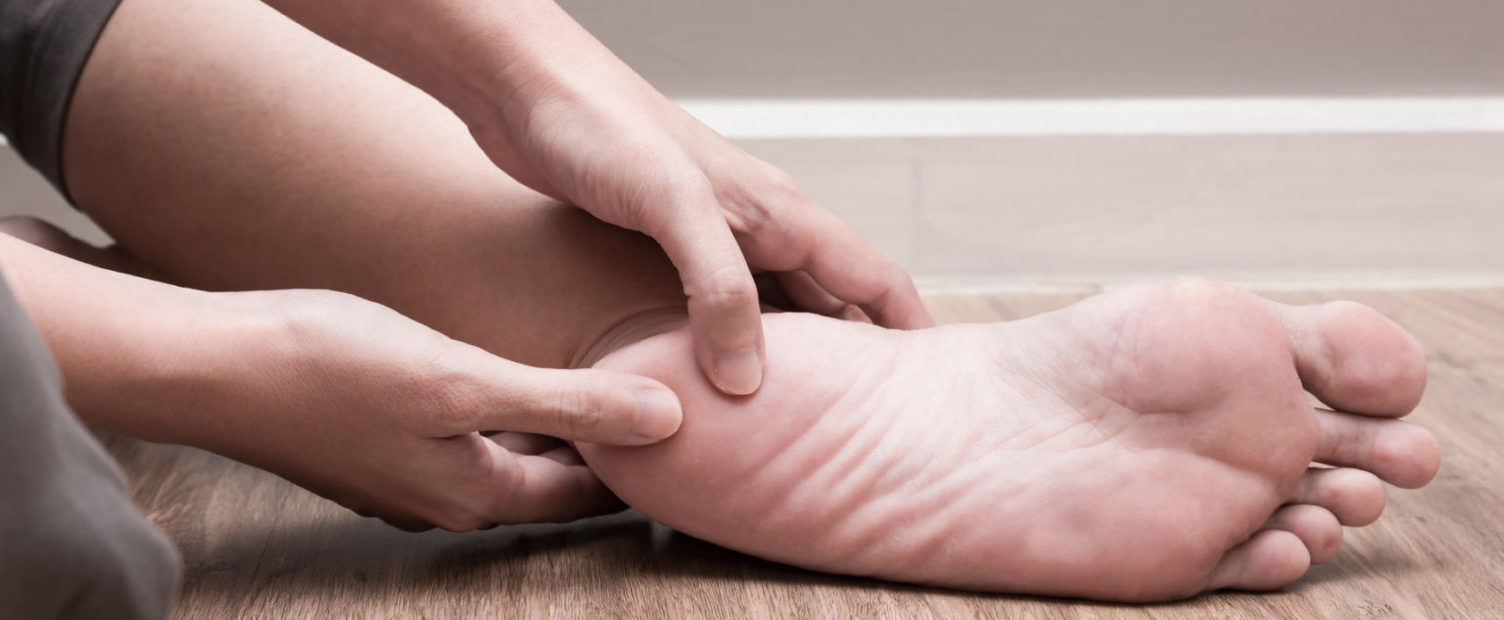
Recent studies show that about three-quarters of all Americans will experience foot pain at some point in their lives. In that group, more than 2 million people who seek treatment each year will learn that they suffer from an overuse condition called Plantar Fasciitis. Plantar fasciitis affects about 10 percent of Americans at some point in their lives, with most being diagnosed after the age of 40. Fortunately, most cases of Plantar Fasciitis are both manageable and treatable.
Plantar Fasciitis will typically present itself as a sharp pain in the heel or the arch of the foot. This usually happens when you’re taking the first few steps out of bed in the morning or after prolonged periods of sitting. The pain is the result of your plantar fascia – the thick band of tissue connecting your heel to the ball of your foot – becoming inflamed and thickened due to overuse.
The inflammation that causes Plantar Fasciitis can come from a sudden increase in activity levels (i.e., walking or running much longer distances) or from sports-related activities that require a lot of running and jumping. Other causes may include a lot of standing, walking or running on hard surfaces, not wearing shoes that properly support your foot type, or being overweight.
Plantar Fasciitis pain may come and go for some without any treatment. However, we never recommend ignoring the pain because this is your body’s way of telling you that something is wrong. Below are 5 things you can do at home to help relieve the discomfort and hopefully keep the condition from getting worse.
- Rest: As with any overuse injury, rest is a key component of recovery. Decrease your distances when walking or running, and try to avoid hard surfaces. Modify the aggravating activities to minimize any long term compensations.
- Stretching: Stretch the soles of your feet by gently pulling your big toe back toward your ankle and holding for 10 seconds at a time. Also, wrap a towel around the ball of your foot and, from a seated position with your heel to the floor, slowly pull your toes toward you, stretching the arch of your foot. As tight calves may also make you more susceptible to Plantar Fasciitis, regular calf stretches with knee straight and bent are a must.
- Massage: A tennis or golf ball can do wonders as a massaging tool. Roll a tennis or golf ball under the sole of your foot, applying weight as comfort allows. Rolling your foot over a frozen water bottle can also work, with the added benefit of helping decrease pain and inflammation.
- Foot Support: When standing for long periods, stand on a thick, padded mat. Don’t take your shoes for granted. Make sure they offer good arch support and that you replace them immediately as the shock absorption begins to wear down. Most shoes have a shelf life of 6 months and may need replacing. Some of you may even benefit from off-the-shelf shoe inserts to improve your arch support.
If pain persists, however, a more individualized treatment plan from a physical therapist is likely needed. Kintsugi Psychical Therapy & Wellness can pinpoint the most likely drivers of your Plantar Fasciitis pain, then customize a treatment regimen that may include flexibility, mobility, and strength exercises, footwear recommendations and/or custom shoe orthotics, and the possible use of taping or splints to help maintain optimal ankle and toe positions.